
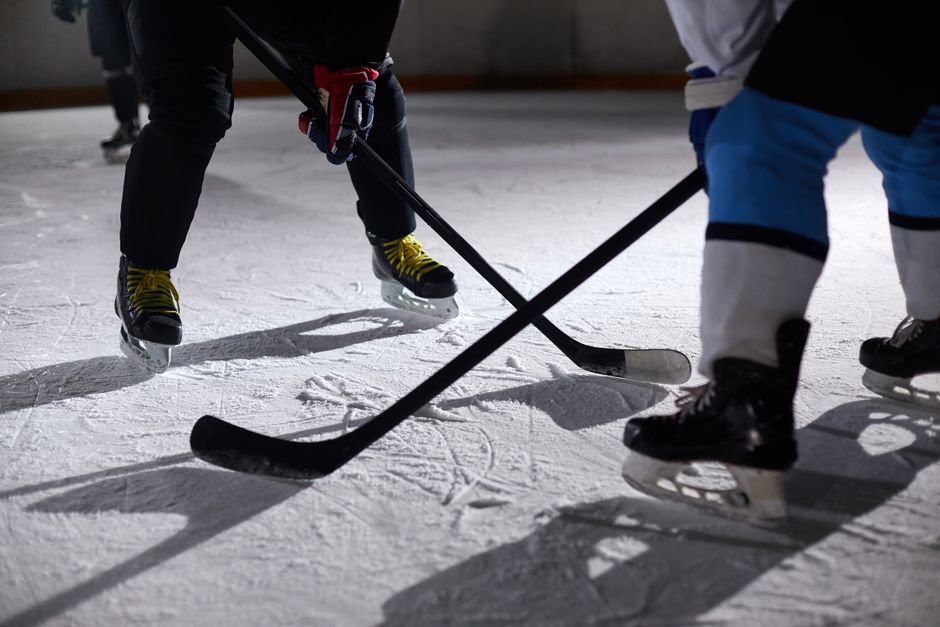
Dallas at Vegas went exactly that way. Mikko Rantanen tied the game 3-3 with five seconds left in regulation, so each team had a point locked in. Miro Heiskanen then scored at 3:36 of the 3-on-3 overtime, in his first game back from injury, and that gave Dallas its second point. Vegas left with one. That's why its record reads 13-6-4: the third number counts losses in overtime or a shootout, and each of those still earns a point.
Why does the losing team get a point?
The league wanted overtime to be played to win. For the 1999-2000 season, the NHL switched overtime from 5-on-5 to 4-on-4 and added the "loser point" to get more games decided in overtime. Before that, a team could lose the point it already had for a tie, so playing it safe made sense. Once the point was guaranteed at the 60-minute mark, a team had nothing to lose by attacking.
Overtime has changed several times:
- 1942–1983: The NHL had no regular-season overtime at all from November 1942, a wartime restriction, through 1982-83. Tied games ended as ties.
- 1983: The league added a five-minute sudden-death overtime, but games still tied after it stayed ties.
- 1999-2000: Overtime went to 4-on-4 and the loser point arrived.
- 2005-06: The shootout ended ties.
- 2015-16: Overtime became 3-on-3 for the full five minutes.
The loser point has a side effect: every game that reaches overtime gives out 3 standings points in total, while regulation games give out 2. Critics have pushed for the international 3-2-1 system, where a regulation win is worth more than an overtime win. The NHL looked at that system in the mid-2000s and turned it down, and Commissioner Gary Bettman has said the loser point will stay at least until he leaves the job.
What happens between regulation and overtime?
There's almost no break. Under Rule 84.1, no intermission goes on the clock. Crews shovel the ice, and overtime should start about two minutes after regulation ends. Players stay on their benches and can't go to the dressing room. Teams defend the same end they defended in the second period.
What happens if someone takes a penalty during 3-on-3?
The team that draws the penalty gets an extra skater, so play goes to 4-on-3. It doesn't drop to 3-on-2. Under Rule 84.3, a team never has fewer than three skaters on the ice. If one team is down two players, it stays at three and the other team goes up to five, making it 5-on-3. If both teams take minors at the same stoppage, play stays 3-on-3.
Can a team pull its goalie in overtime?
Yes, but it's a gamble. Rule 84.2 lets a team swap its goalie for an extra skater. If it loses while the goalie is off the ice, it gives up the point it earned for the regulation tie. The exception is a goalie pulled for a delayed penalty against the other team. A goalie pulled in overtime also can't come back on the fly; he has to wait for a stoppage. Teams rarely get burned this way. As of November 2025, it had happened only three times in NHL history.
How does a shootout work?
If five minutes of overtime don't settle it, each team sends out three shooters, one at a time, against the other goalie. Under Rule 84.4, the home team chooses whether to shoot first or second. If it's still tied after three rounds, it becomes sudden death. No player can shoot twice until every eligible teammate has shot. Players serving a 10-minute misconduct, a game misconduct or a match penalty can't take part.
That last rule has kept stars out of shootouts. In an October 2025 Flyers-Penguins game, four players on each team, Sidney Crosby among them, got 10-minute misconducts at the end of overtime. Crosby couldn't shoot, and the Flyers won the shootout.
Shootouts can also run long. The record is 20 rounds, on December 16, 2014, when Nick Bjugstad finally scored for Florida against Washington.
Why does a shootout win only add one goal to the score?
The rulebook keeps the shootout out of the regular scoring. However many goals go in during the shootout, the winner is credited with exactly one more goal than the score after overtime. A 3-3 game decided in a shootout goes down as 4-3. The losing goalie isn't charged with that extra goal, and the player who scores the deciding shootout goal doesn't get a goal in his personal stats. A team that refuses to take part is given a shootout loss.
Is a shootout win worth as much as an overtime win?
It's worth the same two points, but it counts for less in a tiebreak. When teams finish level, the NHL looks first at points percentage, then regulation wins, then regulation-plus-overtime wins. Shootout wins come after all of those. Heiskanen's goal came in overtime, so Dallas's win counts in that second group.
How often do games go to overtime or a shootout?
Often enough to shape the standings. The NHL had 5,729 ties in its first 87 seasons, and 2,486 games went to a shootout in the 20 years after the shootout began. Shootouts peaked at 15% of all games in 2009-10. The switch to 3-on-3 cut that rate roughly in half, and 2024-25 set a record low of 5.9%.
In 3-on-3's first season, about 61.1% of overtime games ended during overtime, up from 44.8% under 4-on-4 the season before.
Last season the trend turned back. Through the first 425 games of 2025-26, 27.3% of games went past regulation, which would be the highest rate since 2005-06. Only 65.5% of tied games were being settled in overtime. Those are partial-season numbers, and the sources here don't give a final full-season rate. That season the Los Angeles Kings set an NHL record for overtime losses, finishing 35-27-20. They picked up 20 points from games they lost.
Opinions on shootouts are mixed. Stars goalie Jake Oettinger said watching one as a kid felt like winning the lottery. He also admitted some people find them stupid, but said they're fun.
How is playoff overtime different?
It's the old style of hockey, played as long as it takes. Under Rule 84.5, a playoff game tied after regulation goes to a 15-minute intermission. Teams then play full 20-minute periods, changing ends each period, until someone scores. There's no 3-on-3, no shootout and no loser point.
Is overtime the same at the Olympics?
The international game also plays 3-on-3, but the lengths differ. Under IIHF rules, used at the Olympics since 2022, preliminary games get 5 minutes plus a three-round shootout. Knockout games get 10 minutes and a five-round shootout. Gold-medal games get 20 minutes with no shootout.